
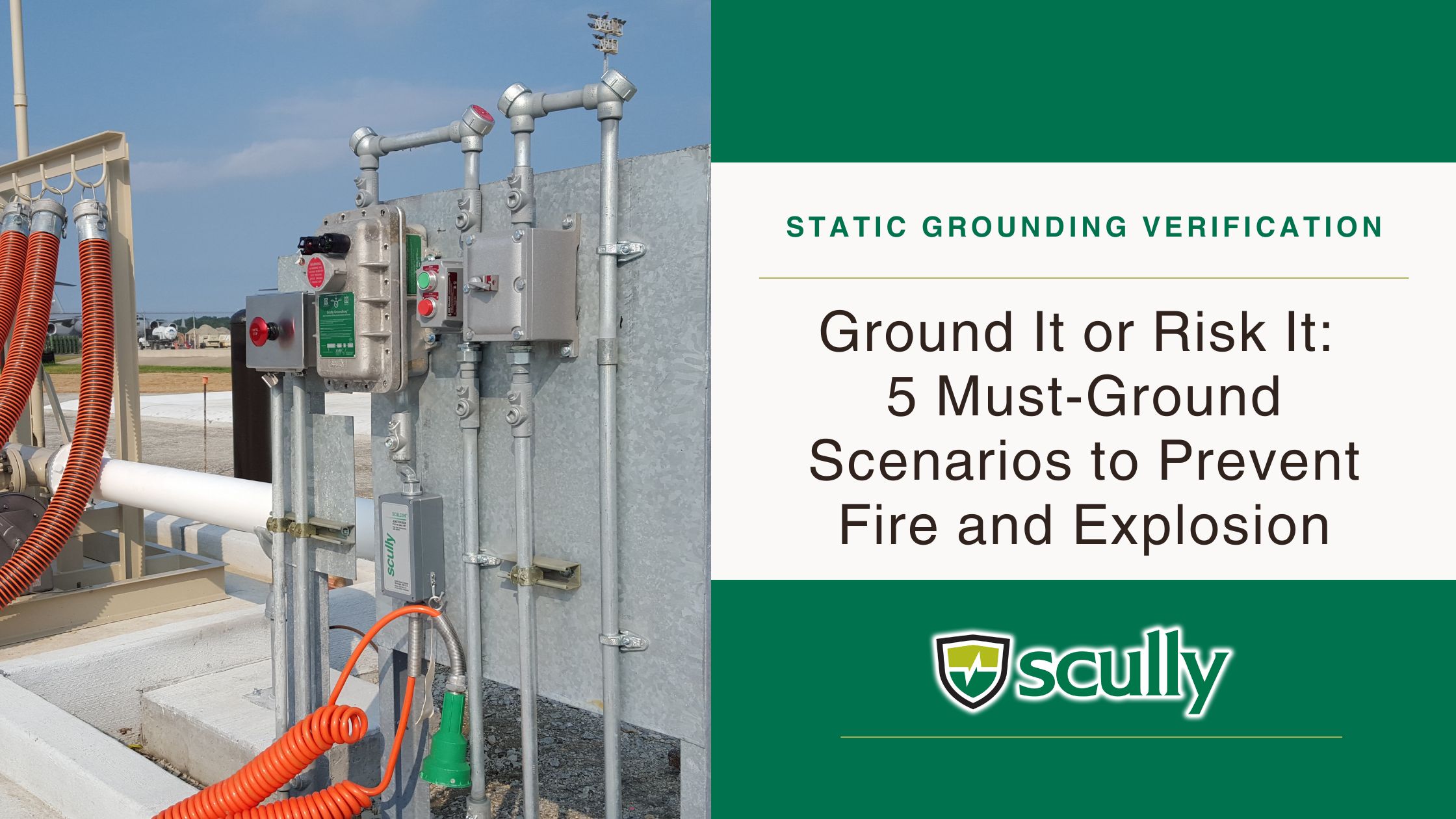
Every year, thousands of tank trucks, railcars, vessels, and barges transport oil, gas, solvents, and other flammable liquids. While moving product from point A to point B may seem routine, a potentially deadly hazard looms over every loading and unloading operation: static electricity.
When flammable liquids, gases, or combustible dust are in play, static electricity is an invisible threat. A single spark—just 25 millijoules—can ignite an explosion. The solution? Verifying that there is a good bond between surfaces to avoid static electricity buildup in an explosive environment.
Five Situations Where Static Grounding Is a Must
When static charges build up and suddenly discharge, the resulting spark can ignite flammable vapors or combustible dust, causing devastating fires or explosions. Static grounding, also known as electrostatic grounding, ensures these charges are safely dissipated, keeping workers, equipment, and facilities safe and operations moving forward.
Static ground verification is a must in these five scenarios.
1. Transferring Flammable Liquids & Gases
Transferring flammable products such as gasoline, crude oil, or solvents is one of the most common – and most dangerous – operations where static grounding is required. The friction created by liquids moving through pipes or hoses can generate significant static buildup. Establishing a solid bond, or proper contact, between the truck and terminal loading equipment equalizes the electrical potential across all surfaces, ensuring effective static grounding.
2. Fueling Operations
Whether refueling an aircraft, loading storage tanks, or topping off a vehicle fleet, fueling operations involve constant movement of flammable liquids. Static charges can build up rapidly, especially in dry conditions. From aircraft to vehicle fleets, ground verification ensures a safe bond.
Aircraft fueling operations, for example, use grounding cables to connect the plane to earth potential before any fuel transfer begins. Modern static ground verification systems ensure that the bond is both present and effective before fuel flows.
3. Explosive Atmospheres
Chemical plants, refineries, and liquid terminals often contain fuel vapors or volatile gases in tanks and silos that create an explosive atmosphere. A small static spark can set off a massive chain reaction. In these environments, static grounding isn’t optional; it’s mandated by OSHA standards and NFPA 77 to eliminate spark hazards. Grounding systems and verification devices ensure that all equipment is bonded and safe before operations begin.
4. Handling Bulk Solids & Powders
Pneumatic conveying systems, grain elevators, and dust-collection equipment are prone to static buildup. Fine powders such as flour, sugar, or pharmaceutical ingredients can be just as hazardous as flammable liquids when dispersed in the air. Static grounding ensures that charges generated during conveying or processing are dissipated before they can ignite airborne dust.
5. Operating Industrial Machinery
Rotating and conveyor systems generate static electricity through the friction between moving parts. In industries where flammable vapors or dust are present, this static can be a dangerous ignition source. Grounding machinery equalizes electrical potential, preventing dangerous charge accumulation. For mobile or temporary setups, ground verification confirms the bond, even in harsh conditions.
The Importance of Grounding Verification Systems
In all five of these scenarios, ground verification is key. A connected cable doesn’t guarantee safety as corrosion or loose fittings can block the bond. That’s why ground verification systems matter, confirming the connection before operations begin. Verification systems measure resistance or use diode-based detection to confirm the bond, often locking out equipment until a safe connection is made.
Safe, Efficient Handling of Hazardous Materials
In high-risk industries, static grounding isn’t just about best practices. Scully, a pioneer in fluid handling equipment and fail-safe detection systems, ensures safe, efficient, and reliable transportation, storage, and handling of valuable—and hazardous—materials.
By implementing proper static grounding and ground verification, you protect workers, keep operations running smoothly, and maintain compliance with industry regulations. And most importantly, you ensure that operations begin and end without a spark.
Contact us today to help determine the right static grounding and verification system to keep your operation safer!